

Getting to work, a class, a friend’s house or the grocery store without waiting for a ride can change daily life. For many adults with developmental disabilities, learning to travel more independently is one of the most meaningful community skills they can build. This guide explains travel training for adults with developmental disabilities: what it is, how it is usually taught step by step, and how families, support coordinators and supervised living staff in Virginia can work on it together.
What Travel Training Means
Travel training is structured, hands-on practice in getting from one place to another safely. It can include walking routes, riding the bus or train, using paratransit, or using a rideshare with support. The goal is not the same for everyone. For one person it may mean riding the bus to work alone; for another it may mean knowing their address, carrying a contact card and asking for help confidently.
Travel skills connect directly to community life. As the Administration for Community Living explains, community living is about people with disabilities being able to live, work and take part in their communities. Getting there is often the first step.
Start With the Person’s Goals
Travel training works best when it starts with where the person wants to go. A route to a job, a weekly class, a place of worship or a favorite park gives practice a real purpose. In supervised living, those goals can be written into the person’s individual support plan and reviewed with the person, their family or guardian and their support coordinator. Our article on building person-centered goals explains how to phrase goals clearly.
Questions to talk through first
- Where does the person want or need to go regularly?
- Which travel options are realistic from home: walking, bus, rail, paratransit, rides?
- What does the person already do well, and what feels hard or worrying?
- What does “more independent” look like for this person right now?
- How will the team know it is safe to step back a little?
A Step-by-Step Approach
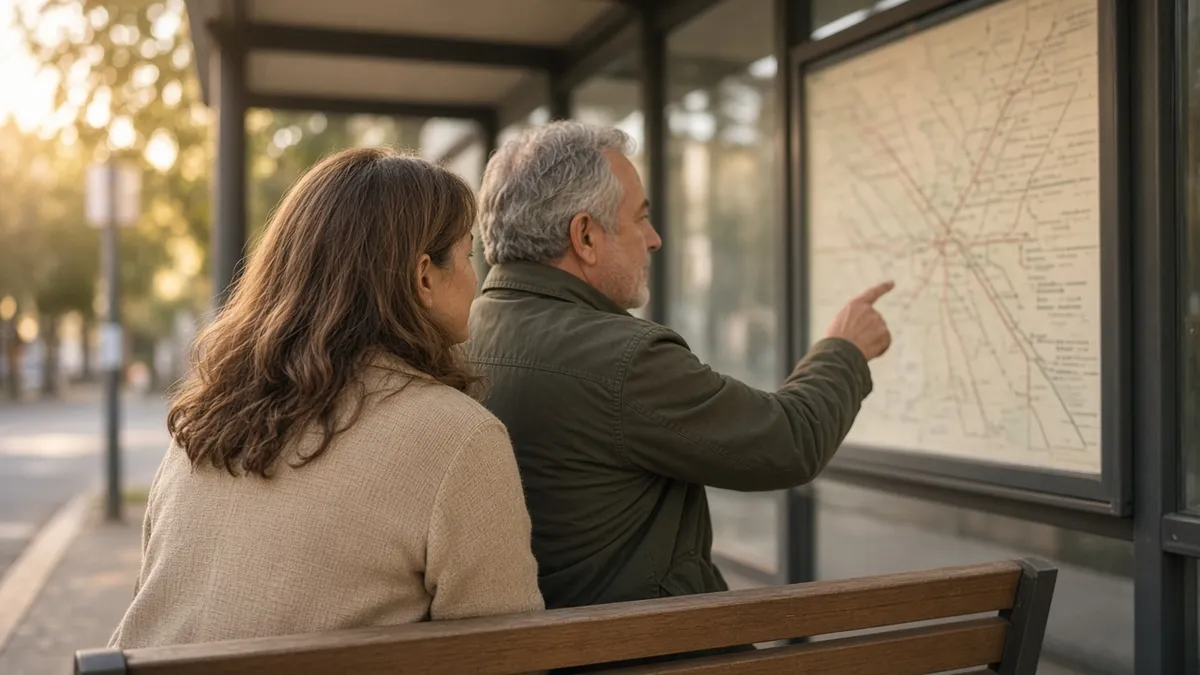
Most travel training moves gradually from full support to less support, at the person’s pace. A common sequence looks like this:
- Plan together at home: look at the route, landmarks, times and what to bring.
- Ride or walk it together: staff model each step and talk through decisions out loud.
- Share the lead: the person leads while staff stay close and step in only when needed.
- Shadow from a distance: staff follow at a distance, ready to help.
- Check in remotely: where appropriate, the person travels and checks in by phone at agreed points.
Not every person will reach every step, and that is fine. Progress is measured against the person’s own goals, not a fixed finish line.
Skills practiced along the way
- Reading schedules or using a simple transit app
- Paying fares or using a transit card
- Recognizing landmarks and the right stop
- Street-crossing and platform safety
- Asking a driver or staff member for help
- Knowing what to do if a bus is late or a stop is missed
Paratransit and Accessible Transportation
Some people will use paratransit for some or all trips. In Northern Virginia and the wider Washington region, WMATA’s MetroAccess is the paratransit service for people who cannot independently use the accessible bus or rail system because of a disability; other parts of Virginia have their own local services. Paratransit rides still involve skills: booking, being ready on time and communicating with drivers.
Travel Training in Supervised Living

Residential supervised living gives people daily, real-world chances to practice. At Xylis Healthcare Services, our DD residential supervised living services include support with daily living and community skills, plus community outings, activities and connections. Staff are present around the clock, so practice can happen on a real schedule—going to a store, an appointment or an activity—rather than as a one-off exercise. For a broader view of everyday skills, see our guide to daily living skills for adults with developmental disabilities and our article on community integration.
Travel goals often pair with routines at home, like planning the week’s errands and chores. Families building a weekly household schedule may find Alomo Cleaning Services’ guide on how often to clean your house a handy reference.
Virginia Waivers and Where to Learn More
Xylis accepts two of Virginia’s DD Medicaid waivers: the Community Living (CL) Waiver and the Family and Individual Supports (FIS) Waiver. The Department of Medical Assistance Services explains the developmental disability waivers, and the Department of Behavioral Health and Developmental Services offers information on developmental services for individuals and families. My Life My Community is another useful starting point for Virginia families.
Frequently Asked Questions
Who should be involved in travel training?
The person comes first, with their family or guardian, support coordinator and the staff who support them day to day. Everyone should agree on the goal and on how support will be reduced safely.
How long does travel training take?
It varies. Some people learn one route in a few weeks of practice; others build skills more gradually. The pace should follow the person’s comfort and safety.
What if independent travel is not the right goal?
That is okay. Goals like knowing personal contact information, booking a ride with help or choosing where to go are valuable community skills too.
Talk With Xylis Healthcare
If you are a family member or support coordinator exploring supervised living that builds real community skills, including travel training for adults with developmental disabilities, we would be glad to talk. Call (240) 639-2059, email xylishealthcare@outlook.com or visit our referrals page. Our office is at 2121 Eisenhower Ave, Alexandria, VA 22314.